Walk-In Shower vs. Tub-Shower Combo: Which Layout Actually Makes Sense for Your Bathroom
Share this article
You're standing in your bathroom with a tape measure, trying to figure out whether to rip out the old tub and go full walk-in or keep some version of a combo. Maybe the tub never gets used, or maybe you have two kids under eight, and the thought of no tub makes you nervous. Either way, you need a real answer, not a mood board.
The honest answer is this: the right choice depends on three things — how you actually use the space, who lives in your home now versus five years from now, and what the square footage will realistically support. After working through hundreds of bathroom remodels, we see the same decision come up over and over, and the people who end up happiest are the ones who thought it through before the demo crew showed up.
What Each Layout Actually Gives You
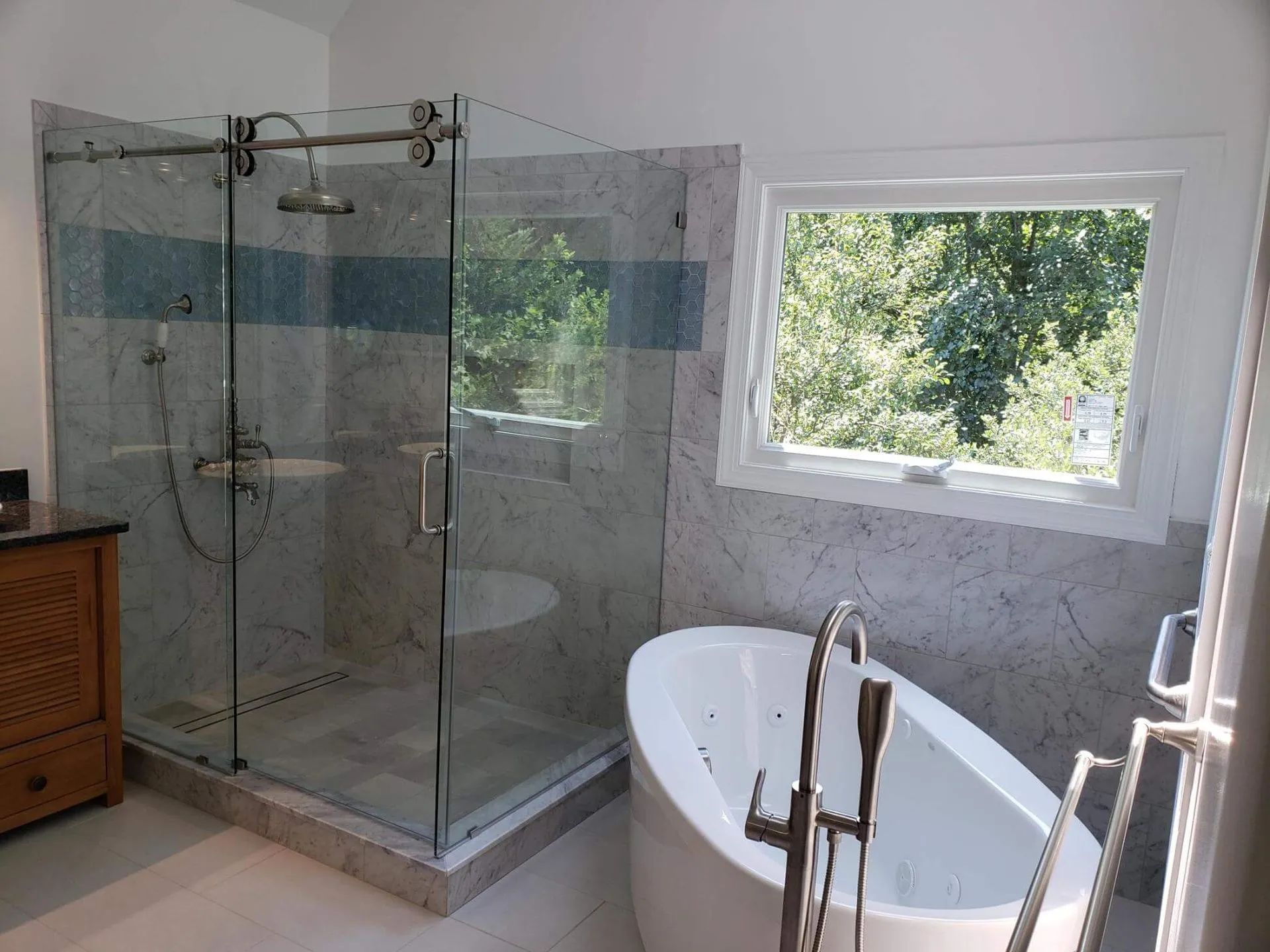
A walk-in shower dedicated to shower use only opens up the floor plan considerably. You gain visual space, accessibility, and the ability to incorporate features like a bench seat, multiple showerheads, or a niche shelf system without the constraints of a tub surround. In a bathroom with at least 36 square feet of usable floor space, a properly sized walk-in feels generous. Below that threshold, it can feel tight and fail to deliver the open look you were going for.
A tub-shower combo keeps a soaking or bathing option in the same footprint as the shower. It is the go-to layout for a primary bathroom in a home with young children, and it holds real value for resale purposes. The tradeoff is reach: shower fixtures mounted for tub clearance are often at the wrong height for daily showering, grout lines on tub surrounds are more extensive and harder to maintain, and the ergonomics of stepping over a tub wall daily wear on people as they age.
Walk-in shower strengths at a glance:
- Accessible entry, no threshold to step over
- Easier to clean when designed with large-format tile and minimal grout joints
- More natural fit for aging-in-place and accessibility modifications
- Visually expands the room in spaces under 80 square feet
Tub-shower combo strengths at a glance:
- Retains bathing option for households with young children
- Meets the expectation most buyers have for a primary bath
- Fits a standard 5-foot alcove without additional framing
- Lower material scope in a straightforward replacement scenario
The Resale Question People Get Wrong
The conventional advice is that removing the only tub in a home hurts resale value. That advice is worth taking seriously, but it has more nuance than the headline suggests.
If your home has a second full bathroom with a tub, converting the primary bath to a walk-in shower rarely causes a valuation problem. Buyers with children who need a soaking tub still have one. If your home has only one bathroom, or only one full bath with a tub, removing that tub entirely can reduce the pool of buyers willing to make a strong offer, particularly in family-oriented neighborhoods. In Chapel Hill's resale market, where a significant share of buyers are families tied to the university and research triangle workforce, this distinction matters more than it might in a retirement-heavy coastal market.
TIP: Before committing to a walk-in-only primary bath, pull three or four recent comparable sales in your neighborhood and check how the bathrooms were listed. If every comparable shows a tub in the primary, a walk-in conversion is a calculated risk worth factoring into your budget planning.
How Square Footage Changes Everything
This is where most bathroom remodel plans run into trouble. People see a walk-in shower on a design site and want that exact look without accounting for whether their bathroom can support it.
A functional walk-in shower needs a minimum interior dimension of 36 by 36 inches, and most designers push for 42 by 42 inches or larger for real comfort. Once you factor in the framing, waterproofing substrate, and tile thickness, you are committing a meaningful chunk of your bathroom floor plan to that single feature. In a 5x8 bathroom, that leaves very little room for a double vanity or any kind of visual breathing space.
A standard tub-shower alcove sits in a 30-inch by 60-inch footprint. It is a known quantity. Framing, plumbing rough-in, and fixture placement in that layout have been standardized for decades, which keeps the scope tighter and the schedule more predictable.
| Bathroom Size | Walk-In Shower | Tub-Shower Combo | Notes |
|---|---|---|---|
| Under 50 sq ft | Possible with careful planning | Fits a standard alcove | Walk-in may feel cramped |
| 50 to 70 sq ft | Works well | Works well | Most flexible range for either layout |
| 70 to 90 sq ft | Strong choice | Works, but tub may dominate | Consider freestanding tub separately |
| Over 90 sq ft | Primary feature | Often paired with separate soaking tub | Full primary suite territory |
Plumbing Scope and What It Costs You in Time
The plumbing implications of each layout are not equal. A like-for-like tub-shower combo replacement, where the tub stays in its existing alcove, and the fixtures are updated, keeps your rough-in plumbing largely intact. You are working with existing drain location, existing hot and cold supply lines, and a footprint the framing already supports.
A walk-in shower conversion requires moving or capping the tub drain, which often means opening the subfloor. If the existing drain location does not line up with your new shower pan or tile mud bed, you are looking at additional plumbing work that adds days to the schedule. In older Chapel Hill homes built in the 1970s through the 1990s, cast iron drain lines are common, and accessing them requires more care than PVC work in newer construction.
WARNING: Do not attempt to relocate a drain line without a licensed plumber reviewing the subfloor and joist configuration first. Cutting through a load-bearing joist to accommodate a new drain path is a structural problem that goes well beyond the bathroom remodel scope and can affect the floor system for the full span of the room.
Waterproofing Is Where the Real Difference Lives
A tub-shower combo with a properly installed tub surround or tile system is a known waterproofing scenario. The tub itself is a waterproof vessel. The surround protects the wall above it.
A walk-in shower moves the entire waterproofing responsibility to the floor and wall assembly. There is no tub basin catching water. Every square inch of the floor must slope correctly toward the drain, and the membrane behind the tile must be continuous and fully bonded. On service calls for leak investigations, shower floor failures almost always trace back to one of three things: an improperly sloped mud bed that allows water to pool, a membrane seam that was not lapped and bonded correctly, or a grout failure at the floor-to-wall transition that was never properly waterproofed in the first place.
The standard we follow on walk-in shower floors is a slope of 1/4 inch per foot toward the drain across the entire shower floor. That is not a suggestion; it is the threshold below which water will stand, tile adhesive will fail, and you will be looking at a full tear-out within five to seven years.
Reliable Bathroom Remodeling from Experts Chapel Hill Trusts
The walk-in shower versus tub-shower question does not have a single right answer, but it does have a right process: look at who uses the bathroom, what the square footage will support, what your plumbing rough-in can accommodate without major rework, and what comparable homes in your neighborhood show in their listings.
In Chapel Hill's humidity-heavy summers and older housing stock, material selection and waterproofing method matter as much as layout choice. A tub-shower combo done right with proper substrate and ventilation will outlast a walk-in shower done carelessly, and the reverse is equally true.
Chamberlain Renovations LLC
has handled
bathroom remodels
throughout Chapel Hill, North Carolina for 25
years. We assess your existing plumbing configuration, floor structure, and ventilation before any layout recommendation, because the right layout for your bathroom is the one that your space can actually support. Reach out to our team to schedule a site assessment and get a clear picture of what your bathroom conversion will actually involve.
Frequently Asked Questions
Can I add a freestanding tub and a walk-in shower in the same bathroom?
Yes, and bathrooms over 80 square feet handle this well. A freestanding tub needs a floor drain for splash management, and supply lines require rough-in positioning during framing. Confirm your floor structure supports a filled cast iron tub, which can exceed 500 pounds before committing.
How long does a walk-in shower conversion typically take compared to a tub replacement?
A tub and surround replacement in an existing alcove runs 3 to 5 days. A walk-in conversion involving drain relocation, waterproofing, and full tile work takes 7 to 12 business days. Custom niche work, bench framing, and specialty drain systems add time to that range.
What tile size works best for a small walk-in shower in a Chapel Hill home?
In showers under 42 by 42 inches, large format tile above 12 by 24 inches risks awkward perimeter cuts. A 4 by 12 subway tile in a vertical stack works better. On the floor, 3-inch hex tile accommodates the required slope without the leveling challenges large format creates.
Does a walk-in shower increase home value more than a renovated tub-shower combo?
Not categorically. A walk-in in a primary bath with a second tub elsewhere reads well to Chapel Hill buyers. Removing the only tub in the home can reduce buyer interest in family price ranges. Tile quality and overall bathroom condition influence perceived value more than layout choice alone.
What should I ask a contractor before a bathroom conversion begins?
Ask which waterproofing system will be used under tile. Ask how slope is established on the shower floor. Ask whether drain relocation requires a permit. Ask how plumbing wall penetrations will be sealed. Specific product names and methods in the answers signal a contractor working at a professional level.
Will Your Bathroom Still Work for You in Twenty Years? Aging-in-Place Features Worth Building In Now